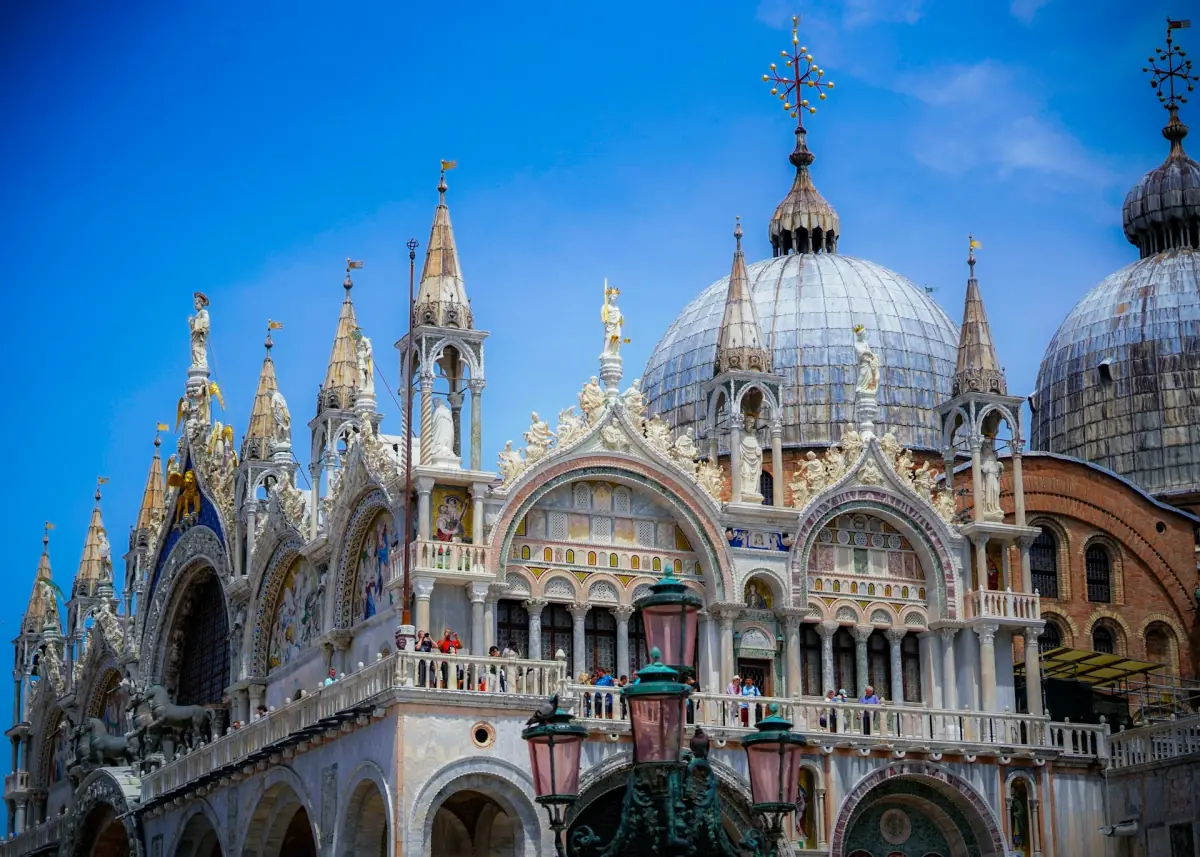
St Mark's Basilica history from relics to cathedral
St Mark's Basilica history begins with the transfer of the relics of St Mark from Alexandria to Venice in the early ninth century. The first church was consecrated in 832. Think of the church as a place built around those relics when approaching it from the square. Start with the façade before going in to see the biblical mosaics inside the church.
Fire and rebuilding followed between 976 and 978. Construction of the present basilica began in 1063, and its mosaic decoration began during the period from 1071 to 1084. The church was consecrated in 1094. The founding of the first church and the consecration of the building seen today belong to separate stages in the history of the site.
On a first visit, it helps to keep those dates separate from the later history of the objects on display. Some of the church’s best known works arrived from Constantinople, and the altarpiece behind the high altar took shape long after the consecration.

A guided visit with Venice history
This basilica and palace visit adds a VR experience about Venice’s past.
Hand-picked tours, booked through Viator. Prices are indicative starting prices in euros (as of November 2026). Tap a tour for live availability and the current price in your currency.

Venetian history at the basilica and the palace
A guided visit pairs St Mark's Basilica with Doge's Palace and includes a digital gallery about Venice in the past.
Architecture of the Basilica
St Mark's Basilica is read most clearly from the domed exterior to the mosaic decoration inside, where the mosaics cover about 8,600 m² in all and include scenes from the Old and New Testaments. The building work and the start of the decoration are separate milestones. On a short visit, the façade, the biblical imagery and the metalwork behind the high altar offer three points at which to pause and see how the building and its contents tell different parts of the story.
The Pala d’Oro took its present form from 1343 to 1345 under Andrea Dandolo. The gold and enamel altarpiece normally faces the back of the high altar and is turned towards the nave for ceremonies celebrated by the Patriarch. The painted Pala feriale by Paolo Veneziano and his sons is now in the museum. The guide to the altarpiece and museum explains which access to choose for each work.
From Constantinople to the cathedral of Venice
St Mark's Basilica received works that reached Venice from Constantinople after the Fourth Crusade in 1204, including the bronze horses, the Nicopeia icon, enamelwork and treasury objects. The original horses moved indoors in 1982 for conservation. Look for the bronze reproductions on the loggia and see the originals in the museum.
The museum also holds mosaic fragments, textiles and liturgical art. The fragments make a useful second stop after the mosaics in the church, where the imagery is spread across the interior. Allow a separate visit to the museum if you want time for these objects as well as the horses.
St Mark's became the seat of the Patriarch of Venice in 1807, succeeding San Pietro a Castello. The church remains a place of worship, so plan sightseeing around visitor hours and Sunday entry. To pair the church with the neighbouring palace, see the basilica and Doge's Palace visits. The guided visit with the digital History Gallery includes a shared gondola ride of 30 minutes and a separate 20-minute gondola introduction.
Questions about the history of St Mark's Basilica
When was the present basilica built?
1063 marks the start of construction of the present St Mark's Basilica. Work on its mosaic decoration began during the period from 1071 to 1084, and the church was consecrated in 1094. The first church on the site had been consecrated earlier, in 832.
Where are the original bronze horses today?
The original bronze horses of St Mark's Basilica are in the museum, where they have been kept since 1982 for conservation. The horses seen on the loggia are bronze reproductions. Include the museum in your visit if you want to see the originals indoors as well.
When did St Mark's become Venice's cathedral?
1807 is when St Mark's Basilica became the seat of the Patriarch of Venice, which had previously been at San Pietro a Castello. That date marks the change in the role of the church. The present basilica was already standing when the patriarchal seat moved there.