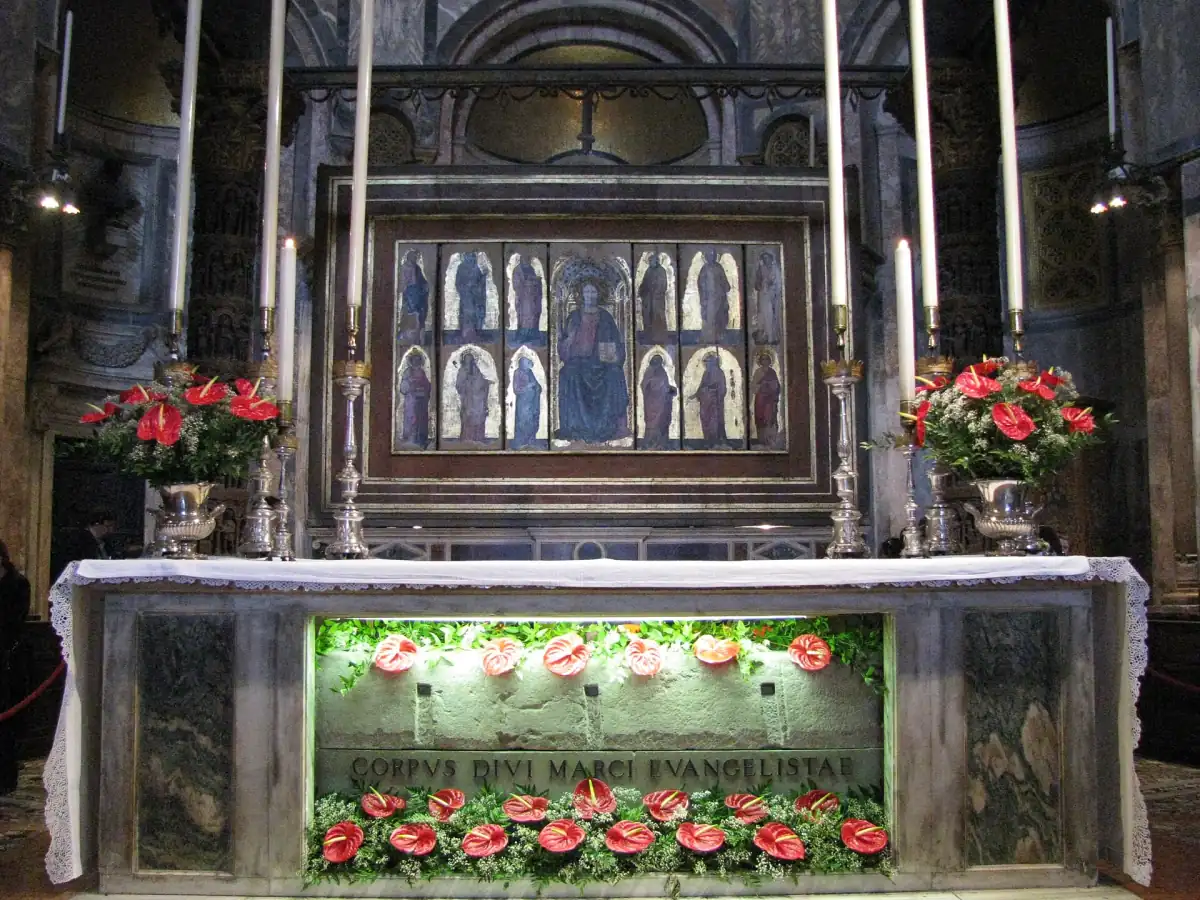
What to see inside St Mark's Basilica
Inside St Mark's Basilica in Venice, the biblical mosaics are the focus of the church visit, while the Pala d’Oro has its own viewing area behind the high altar. The basilica visit is limited to 20 minutes, excluding the altarpiece. Decide before choosing a ticket whether those minutes are enough for the mosaics alone or whether a closer look at the gold and enamel is central to the visit.
St Mark's Basilica has about 8,600 square metres of mosaics in total, with subjects from the Old and New Testaments. The gold backgrounds are one way into the artwork. Start by taking in how much of the church the mosaics cover, then give a scene long enough to make out its figures. With a short visit, concentrating on a few details makes more sense than trying to identify every subject.
Sunday sightseeing in the church starts at 14:00. If the mosaics are the reason for the visit, choose an afternoon ticket for Sunday. The separate entrance at Porta dei Fiori is used for prayer and services.

Explore the basilica interior
This small-group visit includes the Pala d’Oro, with terrace access available by option.
Hand-picked tours, booked through GetYourGuide. Prices are indicative starting prices in euros (as of November 2026). Tap a tour for live availability and the current price in your currency.

Guided visits for the mosaics and Pala d’Oro
See the mosaics with a guide on a small group visit that includes the gold altarpiece. Choose the terrace option for access to the loggia.
Golden mosaics and the high altar
St Mark's Basilica uses gold in both the mosaics across the church interior and the fine enamel work of the Pala d’Oro. Look up for the biblical imagery and use the high altar to orient yourself inside the church. The altarpiece ordinarily faces the back of the altar. It is turned towards the nave for ceremonies celebrated by the Patriarch.
A ticket that covers the Pala d’Oro gives access to the viewing area behind the altar, where the visit is limited to 10 minutes. The Pala d’Oro and museum guide explains how to add it and how the painted Pala feriale in the museum differs from the altarpiece in the church. For the building phases behind the decoration, see the history of St Mark's Basilica.
The small group basilica visit starts at Piazzetta dei Leoncini and includes a guide and access to the Pala d’Oro. Terrace access depends on the option selected. For an independent visit, use the basilica ticket and opening hours guide to match the areas you want to see to your entry time.
Photos, clothing and access inside the basilica
St Mark's Basilica makes a narrow exception for strictly personal photographs. Professional equipment and streaming are prohibited, and reproductions require written permission. Keep quiet around worshippers and use the visit to look closely at the mosaics and the altar. Eating, drinking and touching the artworks are prohibited inside.
For the security check, bring your ID, cover your shoulders and wear shoes. Avoid very short shorts or skirts and low necklines. Men remove headwear. Backpacks and luggage over 40 × 30 × 20 cm and wheeled cases of any size are excluded. Visitors with disabilities and their companions can show proof at the entrance, where staff direct them to the appropriate access point. The museum has a lift and stairlift.

Questions about the interior of St Mark's Basilica
How long can you spend inside the basilica?
20 minutes is the maximum for sightseeing inside St Mark's Basilica, excluding the Pala d’Oro. The altarpiece has a separate viewing limit of 10 minutes. Set aside time for security before the church visit and consider the museum and terrace separately when deciding what to see.
Where is the Pala d’Oro?
The Pala d’Oro stands behind the high altar of St Mark's Basilica and usually faces the back of the altar. Choose entry that covers the altarpiece to see its gold and enamel up close. The painted Pala feriale is displayed in the museum upstairs.
Can you take personal photos inside the basilica?
Yes, St Mark's Basilica allows strictly personal photographs as a narrow exception. Professional equipment and streaming are prohibited, and reproductions require written permission. Keep your movements quiet and give other visitors room to look, especially if you pause with a camera during the short church visit.